001Strategy
How AI Bots (ChatGPT & Gemini) Find, Learn, and Recommend Your Website
How AI Bots (ChatGPT & Gemini) Find, Learn, and Recommend Your Website
Written by Martin — March 18, 2026
As an SEO expert or brand manager, you likely check daily if your products are appearing in modern generative AI engines like ChatGPT or Google’s Gemini.
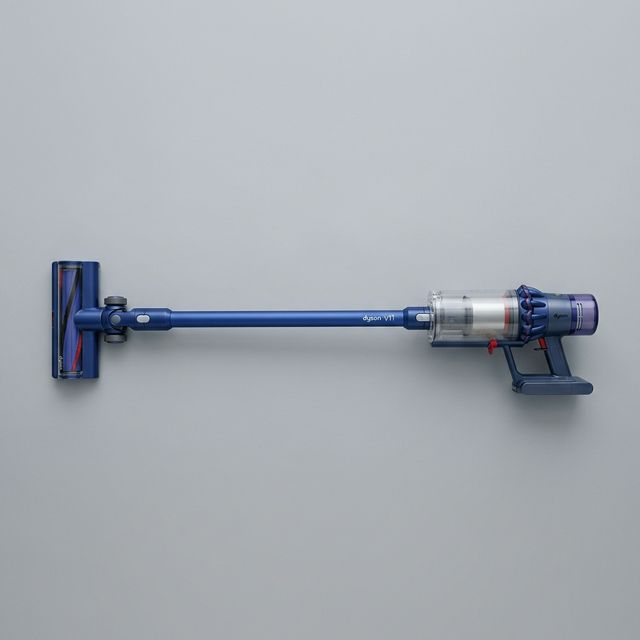
Let's imagine you sell the Dyson V11 Extra. You open Gemini, search for "what are the specs of the Dyson V11 Extra for hardwood floors?", and under the sources, you see your exact product page listed.

Your initial reaction is probably a sigh of relief: "Great! I am safe. The AI has found my page and internalized all my product information."
This is a dangerous, widely-believed myth.
Seeing your page linked as a source in an AI chat does not actually prove the foundational AI model has learned your product information. To understand how to actually survive and optimize for the Generative Engine Optimization (GEO) era, you must fundamentally understand the two distinctly different ways AI systems interact with your website.
1. How AI Actually Learns: The Core Model Training
When massive tech companies like OpenAI (ChatGPT) and Google (Gemini) build their "brains" (the foundational neural networks), they do so by sending out massive fleets of web crawlers like GPTBot, OAI-Searchbot, or Google-Extended.
These bots vacuum up the internet. If they are allowed to crawl your page about the Dyson V11 Extra, they take your specifications, user reviews, and product descriptions and permanently bake them deeply into the neural network itself.
However, this learning does not happen in real-time.
Foundational AI models require an unfathomable amount of computing power and months of time to train. Because of this, OpenAI and Google only release major training updates or "knowledge cutoffs" a few times a year. Even in 2026, the foundational brains are always living months or years in the past:
- OpenAI's advanced ChatGPT-5.4 model has a core knowledge cutoff of August 2025. Anything your brand published or launched in the 7+ months following that cutoff simply does not exist in its inherent memory.
- Older but widely used models like GPT-4o are frozen even further back in October 2023.
If you publish a new product today, or if your enterprise firewall actively blocks these specific AI training crawlers to "protect your intellectual property," your content will never be included in their foundational training datasets. The AI will fundamentally not possess native knowledge of who you are or what you sell.
2. How AI Finds You Right Now: Real-Time Search (RAG)
So, if ChatGPT-5.4's memory stopped in 2025, or if you blocked GPTBot via your firewall, how did Gemini just flawlessly summarize your brand new Dyson V11 Promo Page and cite your link?
It used a highly effective workaround called RAG (Retrieval-Augmented Generation). When you ask the chatbot a highly specific question, the AI pauses its internal memory, connects to the internet, and turns to a traditional search engine:
- ChatGPT silently queries Microsoft Bing.
- Gemini silently queries Google Search.
The traditional search engine rapidly pulls the top indexed results for your query. The AI reads those snippets live in real-time, summarizes them contextually, and spits out an answer with your link attached as a source.
This means you were found solely because you allowed Googlebot or Bingbot to index your site, not because the AI model itself was trained on your data. You survived the query entirely on the back of traditional SEO.
The Two Big Takeaways for AI Optimization
Takeaway #1: A Citation is Not Proof of AI Access
Myth: "If I found my page in Google AI mode (Gemini) under sources, I am safe."
As we've established, this is not true. Your firewall might be aggressively blocking the specific AI training bots (GPTBot, Google-Extended) from scraping your content. Relying entirely on RAG search means you are missing out on being deeply embedded in the foundational intelligence of the world's most powerful models—which severely impacts how the AI recommends your brand in broad, conceptual conversations that don't trigger a live web search.
👉 Are you absolutely sure your site is readable directly by AI bots? Many major brands accidentally block them via standard firewall settings. Run our AI Access Check tool to see a live simulation of what your firewall is blocking right now.
Takeaway #2: AI Bots Search Very Differently Than Humans
Because AI relies so heavily on RAG to supplement its frozen knowledge, how it explores Google or Bing in the background is fundamentally different from a human querying.
A human types: "best dyson vacuum" An AI agent silently generates a massive search string: "Dyson V11 Extra suction power Air Watts vs V15 specifications battery life hardwood floor performance"
When the AI scans the resulting pages, it doesn't care about your emotionally-driven, flashy marketing copy. It needs dense, mathematically structured content. It is desperately searching for machine-readable hierarchies, semantic connections, and unambiguous facts it can quickly digest and summarize for the user.
This is especially critical for complex, technical products with a high volume of specifications. AI models are inherently prone to "hallucination"—a phenomenon where they confidently make up false information when confused by ambiguous or poorly formatted data. If your product page lists technical specs (like battery voltage, suction metrics, or specific hardware compatibility) hidden inside messy, unstructured paragraphs, the AI is highly likely to either misinterpret the numbers, hallucinate false specs to the user, or simply abandon your page entirely in favor of a competitor with cleaner data tables.
If your content isn't flawlessly "digestible" by a machine reader, you don't just miss out on traffic—you risk the AI fundamentally misrepresenting your product to millions of potential buyers.
👉 Ready to stop writing just for humans and start optimizing for machines? Sign up for BobupAI today and learn how our content optimization tools can mathematically structure your pages for the AI era.
Continue reading
More on Strategy.

Best way to track and prove the ROI of AI search optimization to executive leadership
Demonstrating the business value of AI search to executives requires a shift in mindset. Learn why focusing your GEO strategy on product features rather than brand is the key to measurable ROI.

What is AI SEO and How Does AI Impact SEO in 2026?
The digital marketing landscape is shifting from traditional search engines to Generative Engine Optimization (GEO). Learn what AI SEO is and how to adapt your strategy.

Best Generative Engine Optimization (GEO) Tool for Products: A 2026 Comparison
Buyers no longer scroll through search results — they ask ChatGPT, Gemini, and Claude. We compare the best GEO tools for getting your product recommended in those answers.
Newsletter — Stay updated
Enjoyed this article?
Subscribe to our newsletter to get more insights like this delivered to your inbox.